
Paris Fashion Week SS26: The Lavallière shirt on the runways
This year, during Paris Fashion Week, the white shirt was undeniably the queen of the catwalks. At Louis Vuitton, Balenciaga, Givenchy, but especially Dior and Saint Laurent, it took center stage.
Among all the designs, the Lavallière shirt, also called pussy bow, caused a sensation.
The lavallière collar took center stage at the Spring-Summer 2026 shows
At Saint Laurent, for his 30th show, Anthony Vaccarello presented bold and enigmatic silhouettes, revealing a mysterious and elegant French woman. The image that will remain in people's minds is that of an immaculate white poplin shirt embellished with a large lavallière tied in a romantic bow. Paired with leather skirts combining provocation, intellect, and aristocratic presence. The essence of timeless style.

The lavallière collar was also revisited by Jonathan Anderson at Dior, with bold and colorful silhouettes.
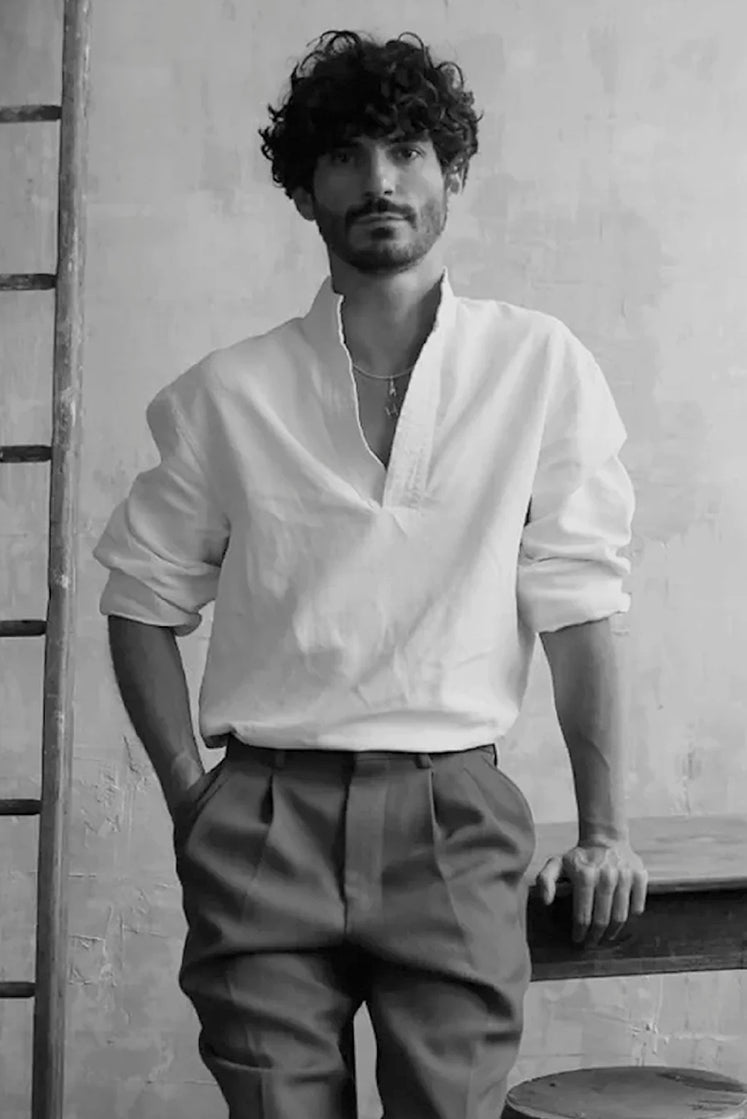
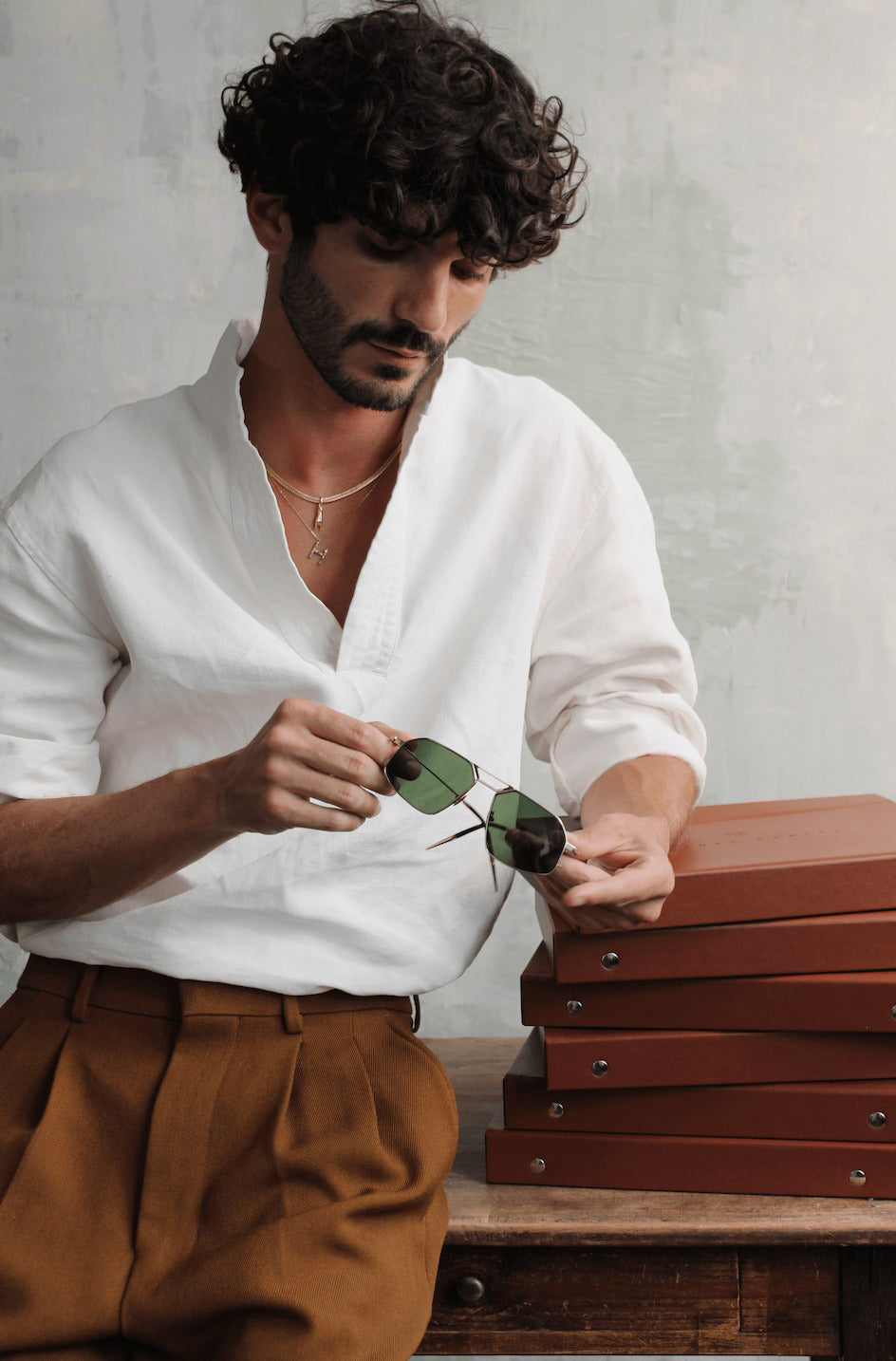
Our iconic Pastel shirt made an appearance on the catwalk, beautifully worn by @brunoastuto alongside Olivier Rousteing. Its ruff-inspired collar enhanced Bruno's outfit, creating a bold and unforgettable look.
The history of the lavallière shirt
Let's take a look back at the fascinating history of the lavallière shirt through the centuries. At the crossroads of elegance, social protest, and androgynous fashion.
In the 17th century: Aristocratic origins
The lavallière originated as a tie worn by Croatian horsemen in the service of King Louis XIII of France. But it was Louis XIV and, above all, the Duchess of La Vallière, the king's favorite, who gave this garment its name.
The Duchess Louise de La Vallière often wore ribbons or bows around her neck, in a style that was both graceful and slightly nonchalant.
Men's fashion took up the trend: gentlemen of the court adopted the lace or muslin knotted tie, the direct ancestor of the lavallière.
18th-19th centuries: From the tie to the lavallière
In the 18th century, ties became a mark of refinement: they were tied in a thousand different ways, with or without a jabot.
But it was in the 19th century that the modern lavallière really appeared:
English dandies (such as Beau Brummell) simplified lace ribbons into a silk band tied loosely under the collar.
During the Second Empire, elegant men (and sometimes bohemian artists) adopted the lavallière, which was more free and romantic than the strict tie.
At the same time, women writers and artists began to appropriate this masculine accessory to assert their intellectual independence.
Late 19th century – early 20th century: Women's emancipation
The lavallière became a powerful symbol of women's emancipation:
Women such as George Sand and Colette adopted it to blur gender codes, asserting their freedom in dress and intellect.
In the 1910s and 1920s, Paul Poiret and Gabrielle Chanel drew inspiration from it to create an androgynous and elegant look: white shirts, muslin lavallières, and loose-fitting suits.
The lavallière thus became a sign of intellectual and liberated elegance.
Mid-20th century: Parisian chic and female power
Figures such as Yves Saint Laurent revisited the lavallière in the 1960s and 1970s:
In women's tuxedos and blouses with lavallières, YSL embodied the modern, powerful, and sensual woman.
Worn by Catherine Deneuve, Bianca Jagger, and Charlotte Rampling, it became a discreet weapon of seduction and a mark of authority.
The lavallière then established itself as the collar of powerful women: elegant, intellectual, but never rigid.
21st century: The return of fluidity
Today, the lavallière is making a comeback in a context of fluidity of genres and styles:
It can be worn just as easily with an oversized men's shirt as with a flowing silk blouse.
Contemporary designers (Saint Laurent, Celine, Bourrienne Paris X, etc.) have revisited it in pure, minimalist, or romantic versions, paying homage to this tension between rigor and freedom.
Over the centuries, the lavallière has stood the test of time without losing its meaning: it embodies distinction, gentleness, and rebellion.
It is a knot that combines classic beauty with the freest modernity.
Bourrienne Paris X Lavallière shirts
At Bourrienne Paris X, we didn't wait to unveil our bow tie designs.
For several years now, our bow tie shirts have been available in poplin and silk, in white or seasonal colors, for a resolutely modern and feminine look.
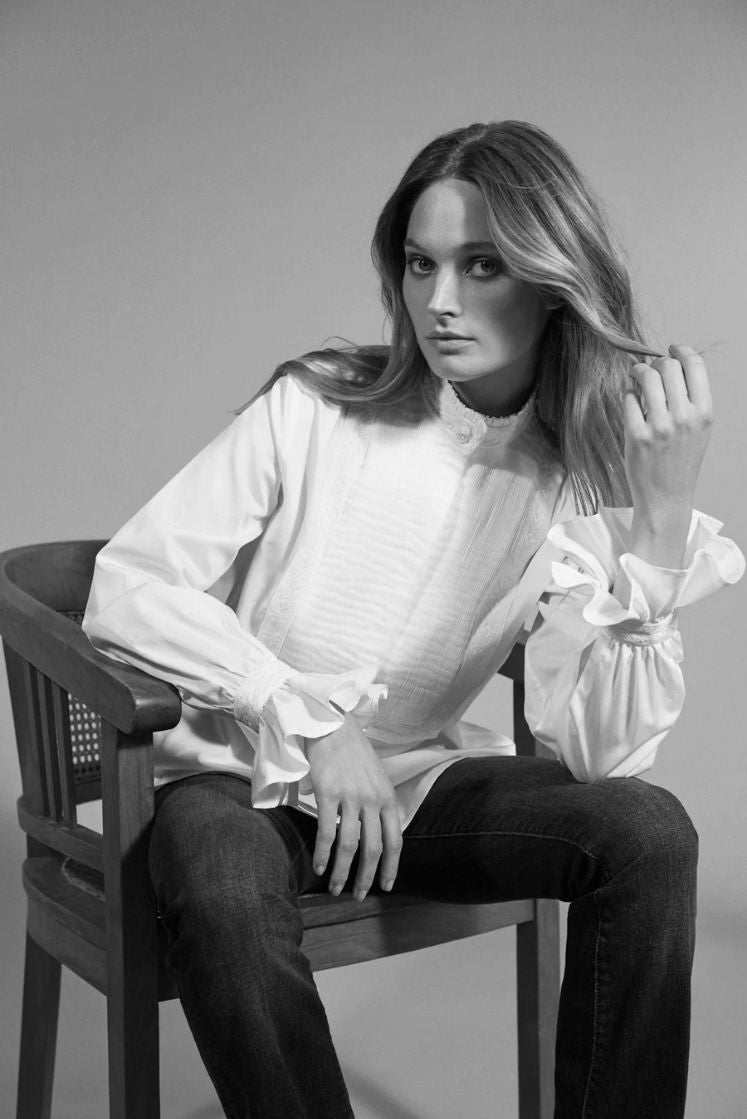
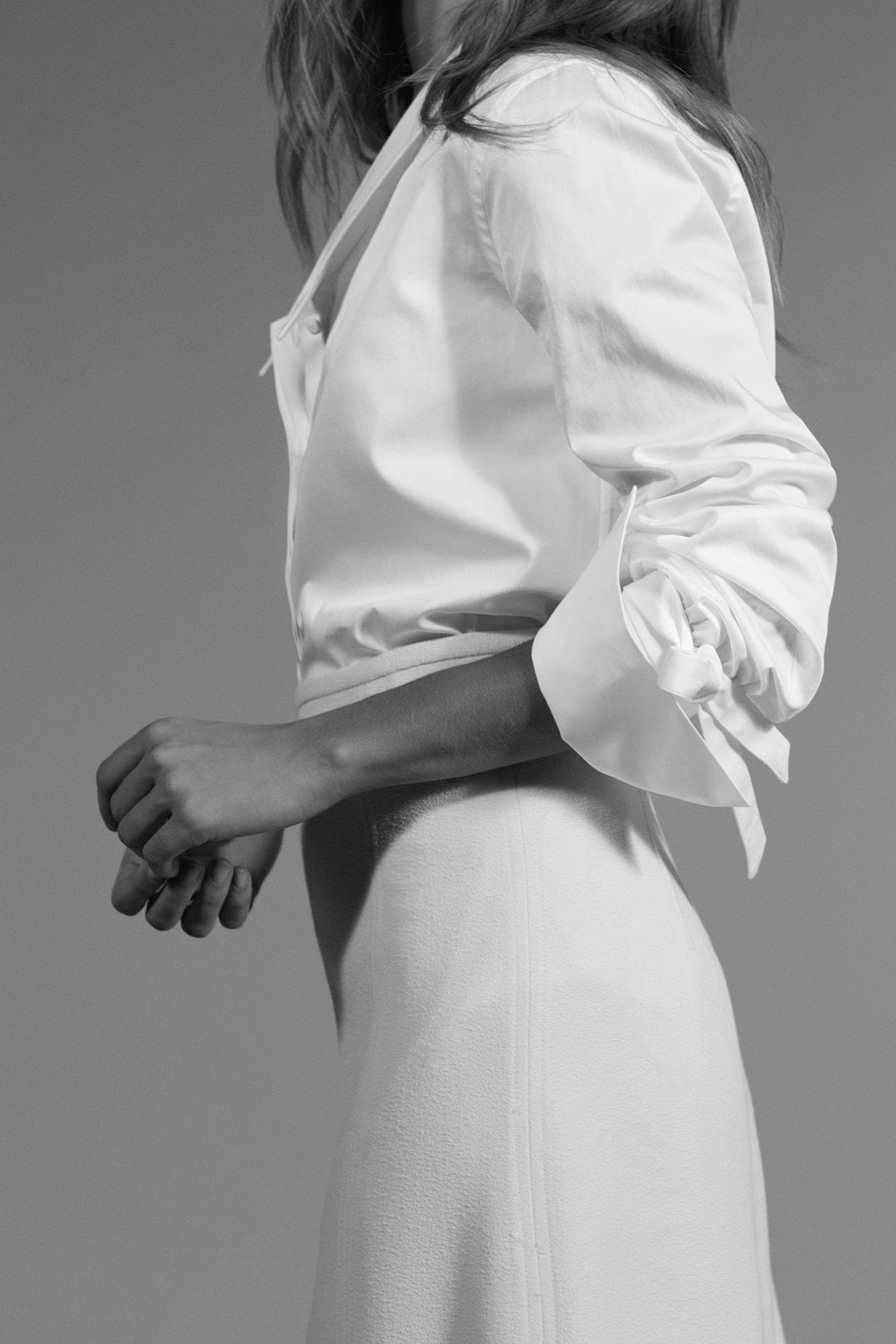
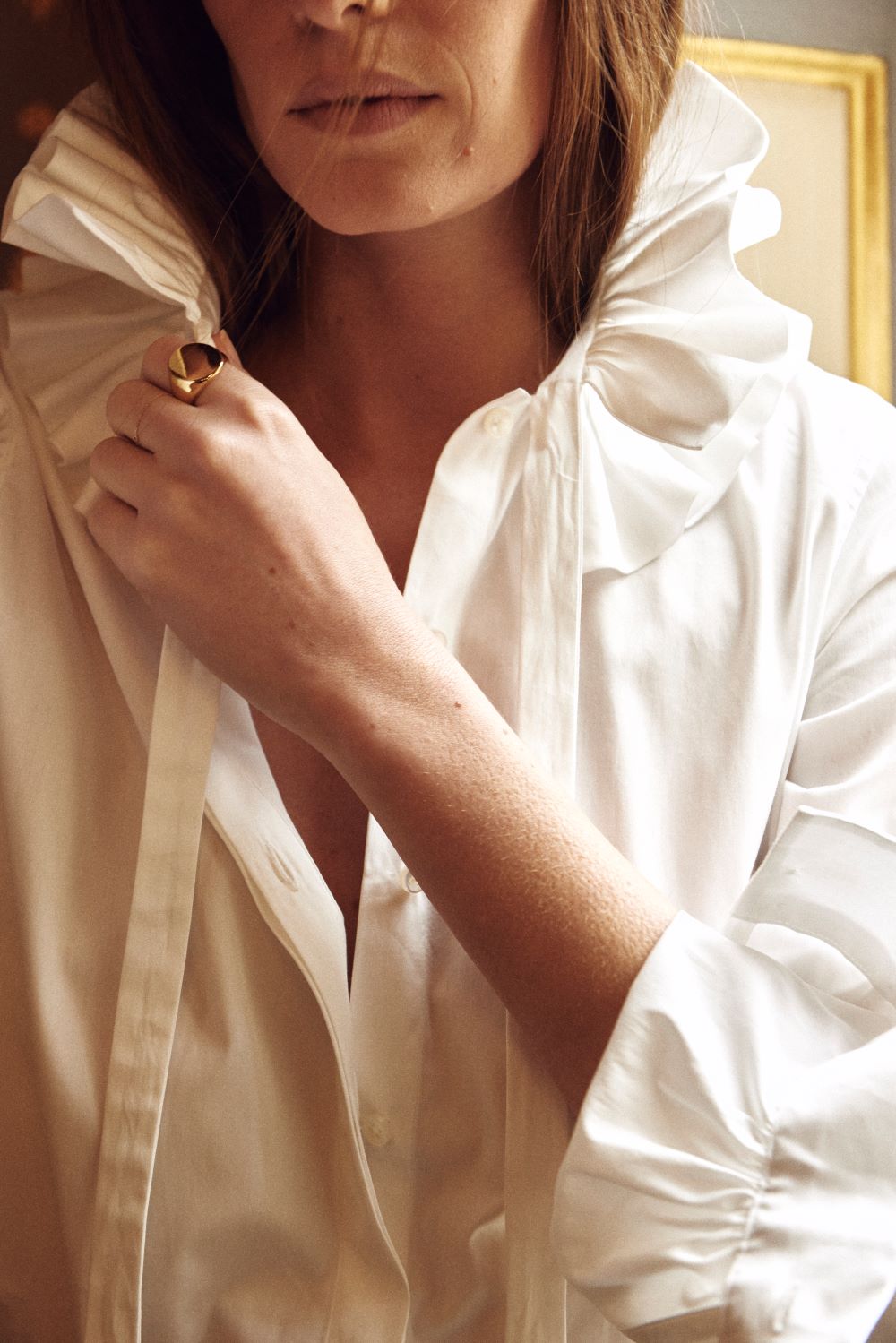
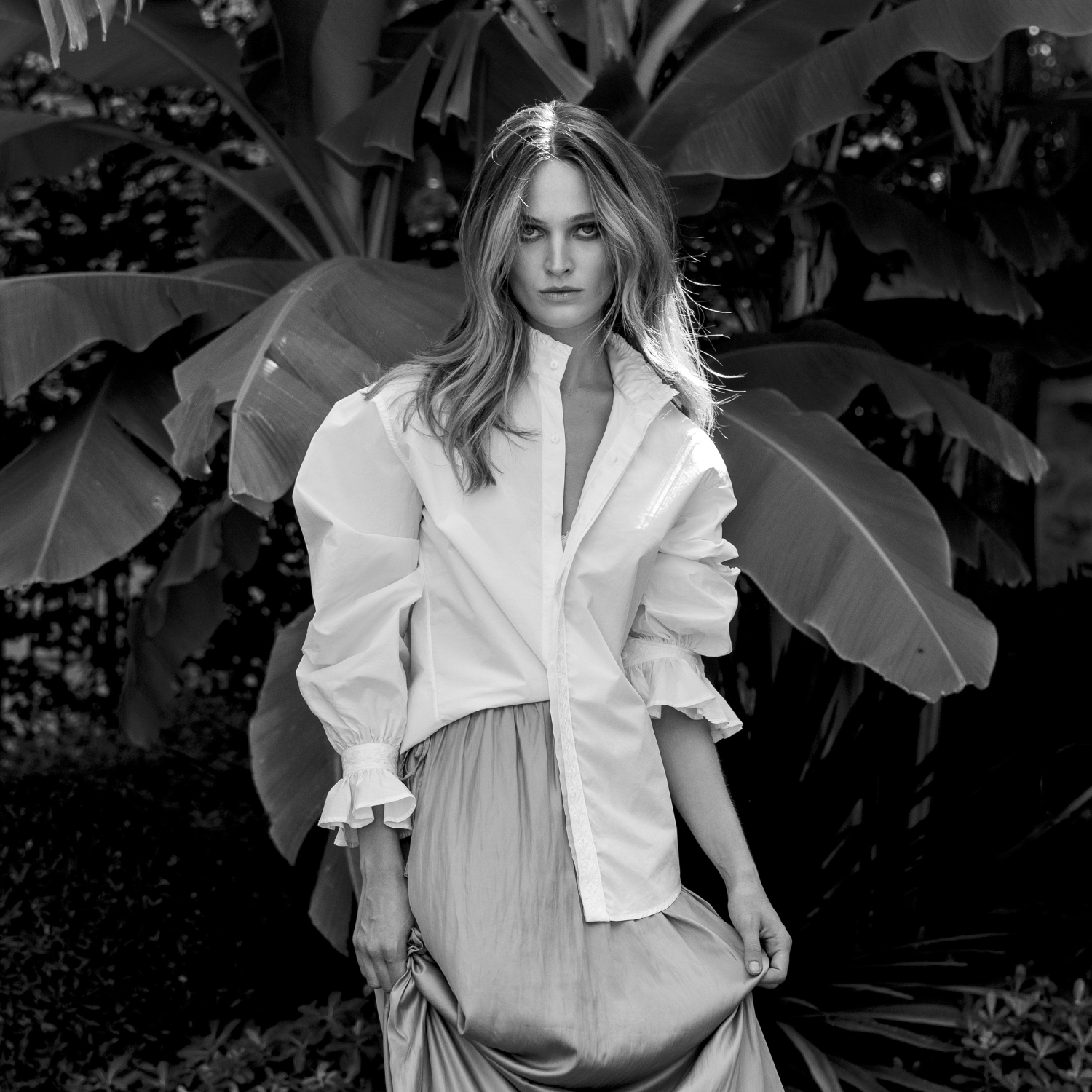
With its oversized lavallière collar, which can be tied or left loose, the CÉLESTE shirt strikes a subtle balance between structure and fluidity. The puffed sleeves, delicately gathered at the shoulders, end in ruffled cuffs that add a touch of lightness and refinement.
The EXQUISE shirt, the result of a collaboration between Alix D. Reynis and Bourrienne Paris X, is made from 100% Italian double-twisted poplin cotton and features a versatile scarf collar that can be tied as a lavallière, bow tie, or left loose. Its ruffled cuffs are delicately highlighted with hand-embroidered floral braiding, inspired by the decorations of the Hôtel de Bourrienne, illustrating the refined craftsmanship of both houses.
The COMTESSE shirt is a feminine and elegant shirt with a scarf collar that can be tied in different ways. Cut from Italian silk, this shirt complements any outfit.

Written by Bourrienne Paris X